
WHEN SHOULD YOU CHANGE
YOUR TYRES?
The signs you shouldn't ignore to stay safe on the road.
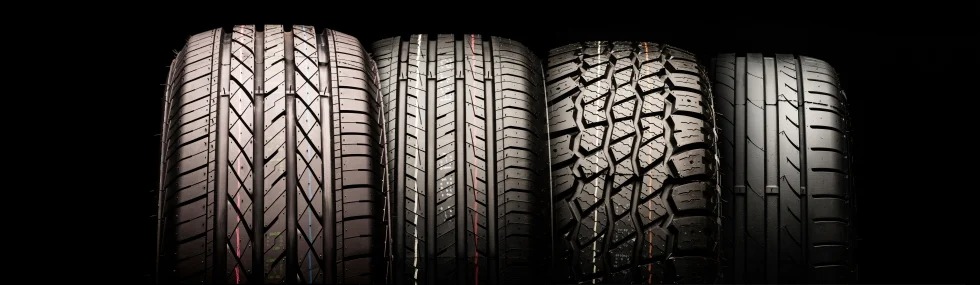
Road safety starts with tyres in good condition. Yet many drivers roll around with worn tyres without even realizing it. In Geneva, where weather conditions can be unpredictable, driving with end-of-life tyres represents a major risk.
1. TREAD DEPTH
In Switzerland, the minimum legal tread depth is 1.6 mm. However, experts recommend changing your tyres as soon as the depth reaches 3 mm for summer tyres and 4 mm for winter tyres. Below these thresholds, grip on wet or snowy surfaces decreases considerably.
To check easily: insert a 2-franc coin into the main groove. If the base of the standing figure is visible, it's time to change.
2. UNEVEN WEAR
If your tyres are wearing unevenly — more on the inside, outside or centre — this may indicate a geometry, pressure or suspension problem. Before simply replacing the tyres, have your wheel alignment checked.
- Wear on the outer edges: frequent under-inflation
- Wear in the centre: over-inflation
- Wear on one side only: geometry problem
3. TYRE AGE
Even if your tyres look good visually, the rubber ages and hardens over time. After 5 years of use, it's recommended to have your tyres inspected every year. After 10 years, replacement is strongly advised, regardless of apparent condition.
The manufacturing date is written on the tyre sidewall as a 4-digit code (DOT). For example, "2523" means week 25 of 2023.
4. VISIBLE SIGNS
Certain signs should alert you immediately and require replacement without delay:
- Hernias or bumps on the tyre sidewall
- Cracks or visible fissures on the tread
- Unusual vibrations at the steering wheel
- Abnormal noises while driving
5. YOUR DRIVING BEHAVIOUR
If you notice that your braking distances are increasing, that your vehicle tends to pull to one side or that grip in turns is diminishing, these are signals that your tyres are no longer doing their job properly.
Unsure about your tyres?
Our technicians come to you for a free diagnosis and quick replacement if needed.
BOOK AN APPOINTMENT